
Montgomery County Court Dockets Defined
A docket is the running list of events in a court case. It usually shows the case number, filing date, parties, case type, hearing notices, motions, orders, continuances, pleas, warrants, judgments, dismissals, sentencing entries, appeals, and other court actions. A docket entry may say that a motion was filed or an order was entered, but the entry is not always the motion or order itself. The full case record is the file that contains the pleadings, exhibits where public, signed orders, warrants, citations, petitions, inventories, accountings, and other documents.
Montgomery County court dockets are divided by court. Superior Court dockets for felonies, divorce, major civil actions, land-title matters, equity matters, and some appeals are tied to the Oconee Judicial Circuit and the Clerk of Superior Court. Probate Court dockets and minute books track estates, wills, guardianships, marriage licenses, vital-record matters, firearms licenses, misdemeanor traffic citations, and game/fish violations. Magistrate Court dockets track small claims, dispossessory cases, garnishments, warrants, first appearances, bond hearings, preliminary hearings, bad checks, county ordinance matters, and related limited-jurisdiction work.
Find Montgomery County Court Dockets
There is no single county public docket portal covering all Montgomery County Superior, Magistrate, Probate, traffic, juvenile, civil, criminal, divorce, and probate cases. Online docket access depends on the record type. PeachCourt is Georgia's civil and criminal eFiling/document portal and requires registration or login for account functions. The Georgia Courts e-access provider list redirects users to provider websites and states that an account is required for court-record search. For many local docket questions, the practical channel remains the specific clerk's counter, phone line, or mail address.
- Decide which court owns the docket. Use Superior Court for felony, divorce, land-title, equity, and broad civil files; Probate Court for probate, marriage, guardianship, firearms-license, and probate traffic items; Magistrate Court for small claims, warrants, bond, and preliminary matters.
- Check an online channel only if it fits the record. PeachCourt may help with eFiled documents for registered users, while Georgia Courts e-access points to provider systems rather than one Montgomery docket page.
- Gather the party name, case number if known, date range, case type, and hearing date. These fields help the clerk distinguish same-name parties and old cases.
- Review docket entries for dates, event labels, filings, orders, and disposition. Ask for the underlying document when the entry alone is not enough.
- Request certified copies from the clerk that keeps the file when the docket will be used for court, licensing, immigration, benefits, or formal proof.
The assigned PeachCourt source matters because eFiling and document access may be available through an account even when no county-branded public docket search exists.

Use PeachCourt as a document and filing channel where it applies, then fall back to the Montgomery County clerk office for full docket history and certified copy requests.
Montgomery County Docket Entry Fields
No official Montgomery County sample docket entry was located in the research without an account or live search. The fields below are therefore the expected docket-entry inventory drawn from the researched court-record field list. They reflect what a clerk-maintained docket commonly shows when a case event is entered, not a promise that every system displays each field online.
| Field | What It Shows |
|---|---|
| Entry date | The date the court recorded a filing, hearing, order, warrant, judgment, plea, sentence, continuance, appeal, or other event. |
| Event type | The docket label, such as complaint filed, answer filed, motion, hearing notice, order, dismissal, bond set, indictment filed, plea, or sentence. |
| Case number | The file number used by the clerk to locate the docket and any document tied to the event. |
| Party or filer | The party, attorney, prosecutor, petitioner, respondent, or clerk action tied to the docket entry when the system tracks it. |
| Court action | The judge's or clerk's action, such as order entered, bond set, warrant issued, case dismissed, judgment entered, or hearing continued. |
| Document reference | A note that a pleading, order, warrant, citation, petition, inventory, accounting, or other document exists in the full case file. |
Montgomery County Court Dockets by Court
The local docket path follows Georgia's court hierarchy. Montgomery County is in the Oconee Judicial Circuit for Superior Court, and the county page states that the circuit includes Montgomery, Bleckley, Dodge, Pulaski, Telfair, and Wheeler Counties. Appeals from Superior Court generally go to the Georgia Court of Appeals unless a category is reserved to the Supreme Court of Georgia. Lower court dockets are kept by the court that hears the matter, so a probate traffic docket is not searched the same way as a felony docket.
- Superior Court dockets cover felony criminal cases, divorce, major civil actions, land-title matters, equity matters, and broad civil law actions.
- Juvenile Court records are managed through the Clerk of Superior Court, but public access is restricted by Georgia juvenile-record rules.
- Probate Court dockets and minute books cover estates, wills, guardianships, marriage licenses, vital records, firearms licenses, probate traffic, and game/fish violations.
- Magistrate Court dockets cover small civil claims, dispossessory actions, garnishments, warrants, first appearances, bond hearings, and preliminary hearings.
- Municipal traffic or ordinance questions in Mount Vernon should be checked with city offices when the citation is city-level rather than county-level.
Montgomery County Dockets vs Case Records
A Montgomery County docket is useful for tracking where a case stands, but it is not the full file. It may show that a complaint, motion, order, warrant, plea, sentence, petition, inventory, or accounting was filed. The full case record is where the actual document should be requested. For a broader look at all local court-file channels, the Montgomery County court records page explains how the offices divide case, probate, magistrate, and clerk-index records.
| Docket | Full Case Record | |
|---|---|---|
| Format | Chronological list of case events. | Filed pleadings, orders, warrants, petitions, inventories, judgments, and other documents. |
| Access | May be visible through a provider, account system, or clerk lookup. | Often requires a clerk request, copy fee, certification request, or file review. |
| Best use | Track progress, hearing dates, filings, and final outcomes. | Read the text of filings, confirm legal terms, and obtain proof. |
| Limits | May use short labels and may omit restricted details. | May include sealed, redacted, confidential, or nonpublic portions. |
The assigned CourtListener source is useful for understanding the difference between public docket data and document access in a broader court-record context, although Montgomery County state case files are not searched through that federal-style service.
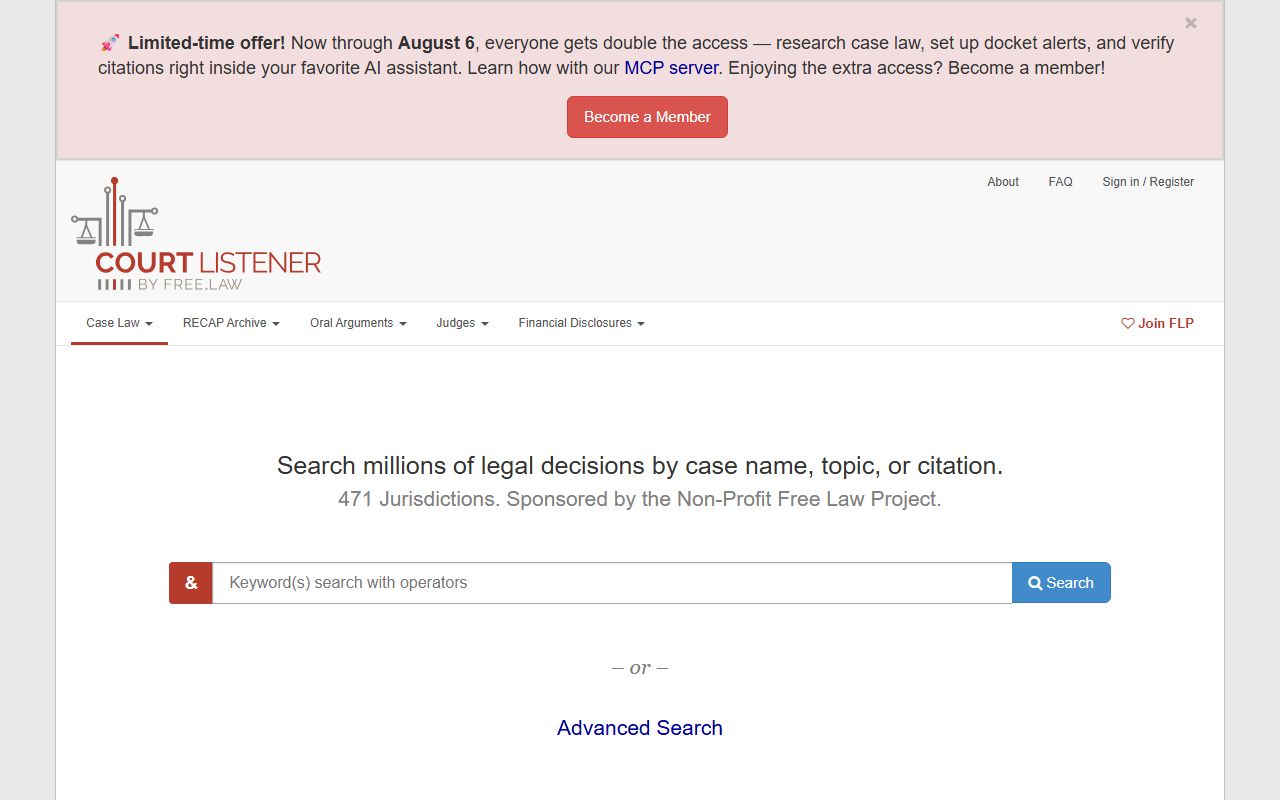
For Montgomery County dockets, treat any outside docket tool as context only and verify state trial-court entries with the local court clerk.
Read Montgomery County Court Dockets
Docket terms are short because they are event labels. A complaint starts many civil cases. A petition asks the court for relief, which is common in divorce, probate, guardianship, and protective-order matters. A motion asks a judge for an order. An order is the judge's written ruling or direction. A judgment is a final or enforceable decision. A disposition is the outcome of a charge or case. In criminal matters, an indictment is a grand-jury charging document, while an accusation is a prosecutor-filed charging document.
Some entries point to timing rather than outcome. Arraignment means charges are read and a plea is entered. Bond means a release condition or security amount was set. Preliminary hearing entries often belong to Magistrate Court in the early part of a criminal case. In probate, a docket may refer to letters testamentary, administration, inventory, accounting, notice, order, or discharge. If an entry uses a term that changes rights or deadlines, ask the clerk for the actual document rather than relying on the short docket text alone.
Note: A docket can show a filing exists, but the clerk's file controls the exact wording and certified copy status.