
Montgomery Superior Court Overview
Georgia's general-jurisdiction county trial court is the Superior Court. For Montgomery County, that means the Superior Court, not a District Court, is the court for felony prosecutions, divorce, land-title matters, equity cases, broad civil actions, and appeals or review from lower courts where Georgia law allows it. The Clerk of Superior Court manages Superior and Juvenile court records locally.
Readers should use Superior Court terminology when calling the clerk, reading Georgia court pages, or matching a case type to the correct local office.
Montgomery County belongs to the Oconee Judicial Circuit. The official county Oconee Circuit page says the circuit includes Montgomery, Bleckley, Dodge, Pulaski, Telfair, and Wheeler Counties. It describes Superior Court as one of general jurisdiction handling civil and criminal law actions.
The official Montgomery County Oconee Judicial Circuit page is the local source for circuit counties and Superior Court jurisdiction.
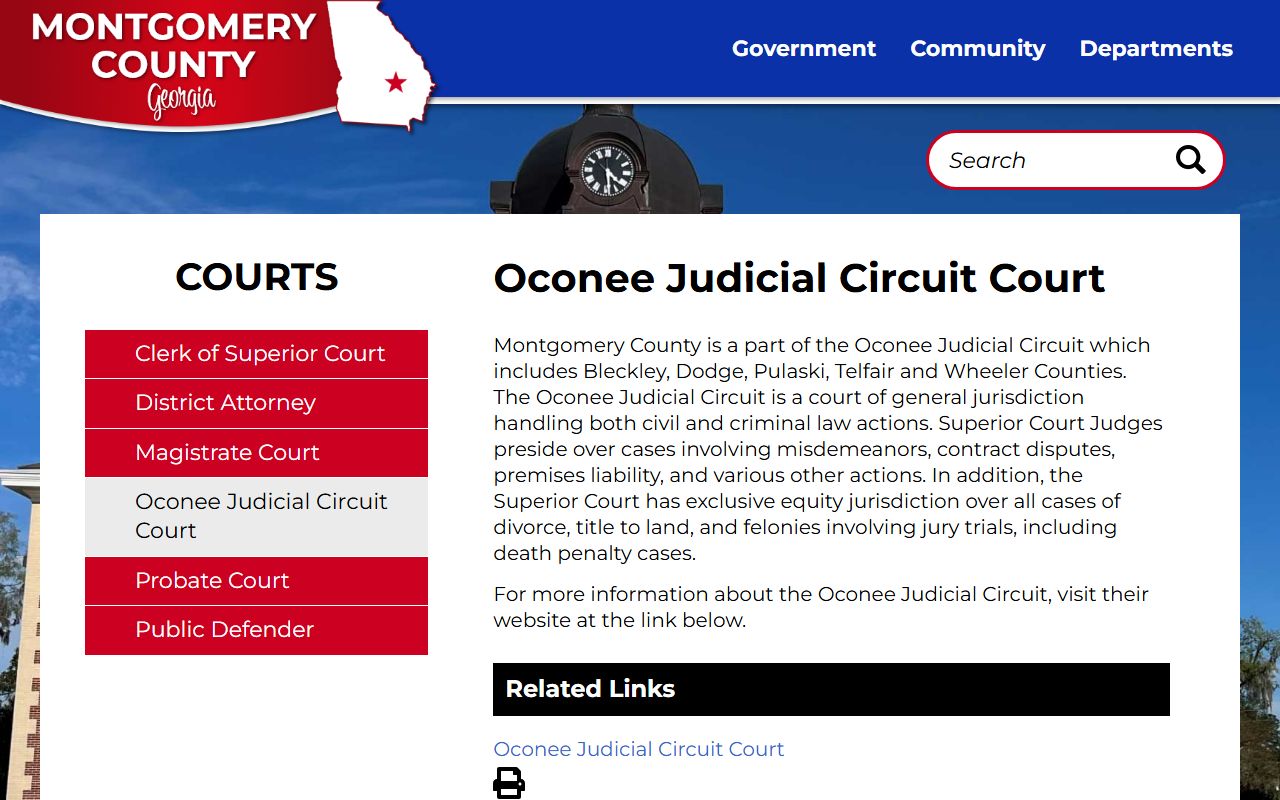
The circuit source confirms that Superior Court is the correct Montgomery County trial-court term for these records.
Montgomery Court Offices
Montgomery County court records are split by court and office. The courthouse at 400 South Railroad Avenue is the central record counter for Superior/Juvenile court records, Probate Court records, Probate traffic citations, Magistrate civil and warrant matters, marriage-license records, estate filings, and many copy requests.
| Court or Office | Type | Address | Phone |
|---|---|---|---|
| Superior Court / Clerk | Superior and Juvenile court records, civil, criminal, divorce, real estate, UCC, liens, trade names, notary, jury | 400 S. Railroad Ave., P.O. Box 311, Mount Vernon, GA 30445 | 912-583-4401 |
| Oconee Judicial Circuit Superior Court | General jurisdiction for civil and criminal law actions in the circuit | Montgomery County is in the Oconee Circuit; judge offices vary by circuit location | Contacts vary by judge office |
| Magistrate Court | Small civil claims under $15,000, dispossessory, garnishments, warrants, first appearances, bond, preliminary hearings | 400 South Railroad Avenue, P.O. Box 174, Mount Vernon, GA 30445 | 912-583-2170 |
| Probate Court | Estates, wills, guardianships, marriage, vital records, firearms licenses, Probate traffic citations | 400 S. Railroad Avenue, P.O. Box 444, Mount Vernon, GA 30445 | 912-583-2681 |
| District Attorney, Oconee Circuit | Felony and misdemeanor prosecution in Superior and Juvenile courts of the circuit | 615 Second Avenue, P.O. Box 1027, Eastman, GA 31023 | 478-374-3482 |
| Mount Vernon Police / possible municipal matters | City police and possible municipal traffic or ordinance questions | 435 S Railroad Avenue, Mount Vernon, GA 30445 | 912-583-2323 |
The Eighth Judicial Administrative District Montgomery County table also lists local court offices for Montgomery County.
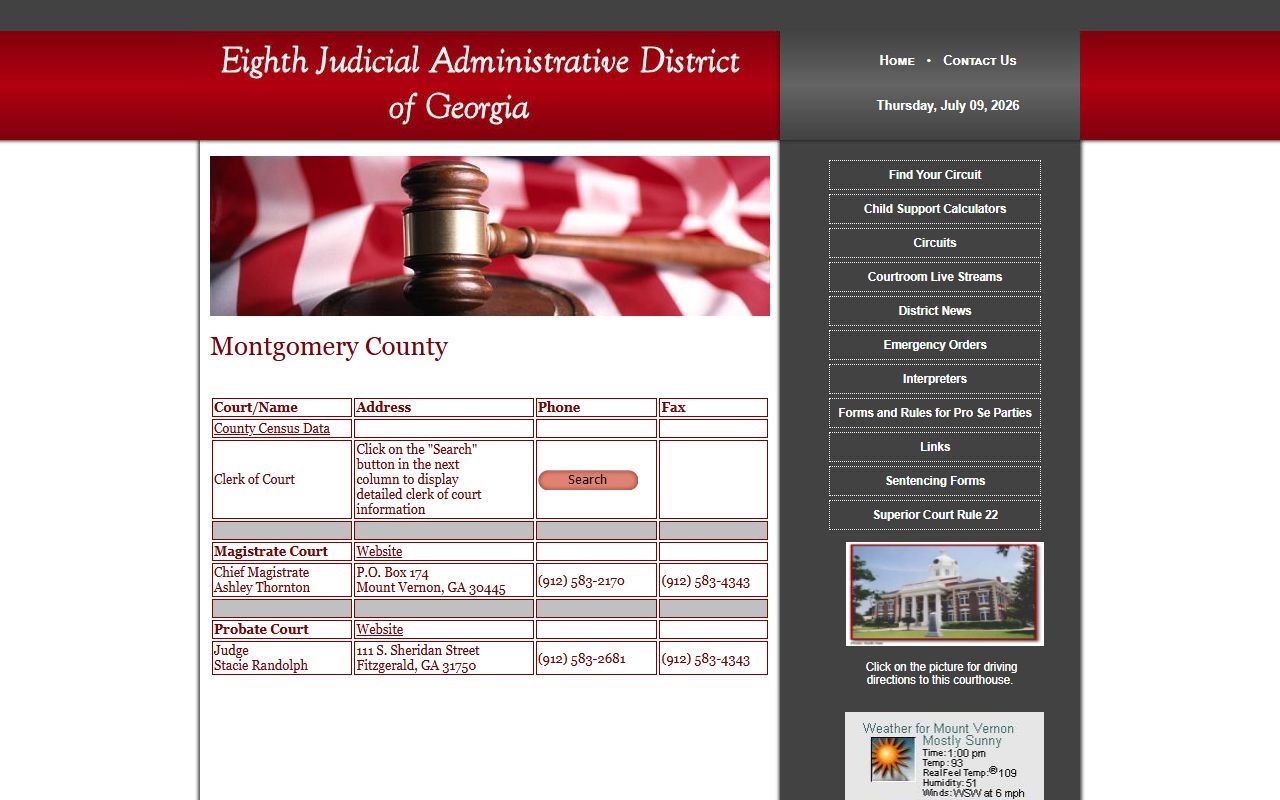
The Eighth District listing helps confirm local court roles alongside the county courthouse pages.
Superior vs Lower Courts
The right Montgomery County court depends on the case type. Superior Court is broad and high-level. Magistrate Court is limited and practical for small civil, eviction, garnishment, warrant, first-appearance, bond, and preliminary hearing matters. Probate Court is a specialized local court for estates, marriage, vital records, firearms licenses, guardianships, and Probate traffic.
| Superior Court | Magistrate Court | Probate Court | Municipal Court | |
|---|---|---|---|---|
| Main civil role | Broad civil, land-title, equity, divorce, and actions outside Magistrate limits | Small civil claims under $15,000, dispossessory, garnishment, FiFa, levy | Estates, wills, guardianship, conservatorship, vital-record related matters | City ordinance and traffic matters where a city operates a court |
| Criminal role | Felonies and some misdemeanor prosecution through the circuit | Warrants, first appearances, bond hearings, preliminary hearings, bad checks, ordinances | Misdemeanor traffic citations plus game and fish violations | City traffic or ordinance citations |
| Primary clerk | Clerk of Superior Court | Magistrate Court office | Probate Judge and staff | City office or municipal court contact |
| Local contact | 912-583-4401 | 912-583-2170 | 912-583-2681 | Mount Vernon Police listed at 912-583-2323 |
Georgia also has appellate courts. Most appeals from Superior Court go to the Georgia Court of Appeals unless Georgia law sends the case to the Supreme Court of Georgia.
Montgomery Case Flow
A criminal matter may begin with a warrant, arrest, citation, or first appearance in Magistrate or Probate Court before a felony or circuit-level prosecution is filed in Superior Court. The District Attorney for the Oconee Circuit prosecutes felony and misdemeanor cases in Superior and Juvenile courts of the circuit and serves as legal advisor to law enforcement agencies and grand juries.
The charge record and the Superior Court case record may not match at every stage. An arrest charge can appear in jail or warrant records, a first appearance can occur in Magistrate Court, and the DA may later file a different accusation or seek an indictment. The Superior Court file is where later pleadings, pleas, verdicts, sentencing orders, probation terms, restitution, and final dispositions are tracked for circuit-level cases.
Criminal flow: Warrant or arrest › Magistrate first appearance or bond › DA review › indictment or accusation › Superior Court arraignment › motions or plea talks › trial or plea › sentence › appeal.
Civil flow: complaint or petition filed › service › answer › motions › discovery › hearing, mediation, trial, or settlement › order or judgment › post-judgment action or appeal.
The Eighth District Oconee Judicial Circuit page lists circuit judges and contacts, including Chief Judge Sarah F. Wall, Judge C. Michael Johnson, and Judge Howard C. Kaufold, Jr.
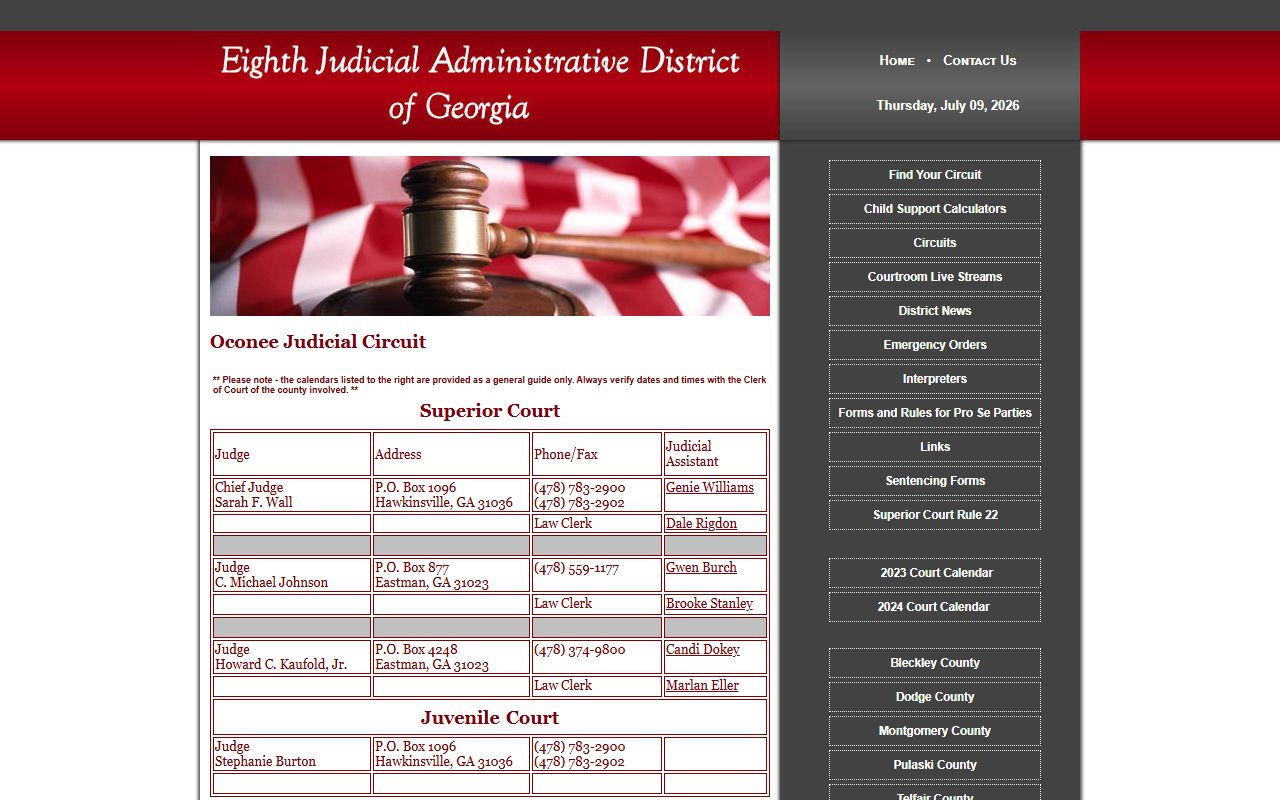
Judge office contacts may be circuit-level rather than located at the Montgomery County clerk counter.
Montgomery Superior Records
Superior Court records in Montgomery County can include civil complaints, answers, motions, orders, judgments, settlement notices, dismissals, subpoenas, appeals, and post-judgment activity. Criminal Superior Court records can include indictment or accusation material, bond orders, arraignment entries, motions, pleas, trial entries, verdicts, sentencing orders, probation conditions, restitution, fines, and disposition entries.
Family and domestic records route to Superior Court when they involve divorce. Georgia sources in the research state that divorce case files are held by the Clerk of Superior Court in the county where the divorce was granted. Vital-record offices may verify some events, but certified divorce decrees come from the Superior Court clerk.
Juvenile Court records are managed locally through the Clerk of Superior Court, but juvenile records are more restricted than adult court files. Public lookup should not be assumed.
Oconee Judicial Circuit
The Oconee Judicial Circuit ties Montgomery County to nearby counties for Superior Court administration. Circuit-level offices may sit outside Mount Vernon even when the county record counter is local. District Attorney Timothy G. Vaughn's office is listed in Eastman, and the Public Defender page links users to the Oconee Judicial Circuit Public Defender through the Georgia Public Defender Council system.
Federal court is separate. Montgomery County is in the U.S. District Court for the Southern District of Georgia. The Southern District of Georgia handles federal civil and criminal matters, while PACER/CM-ECF is used for federal electronic case access.
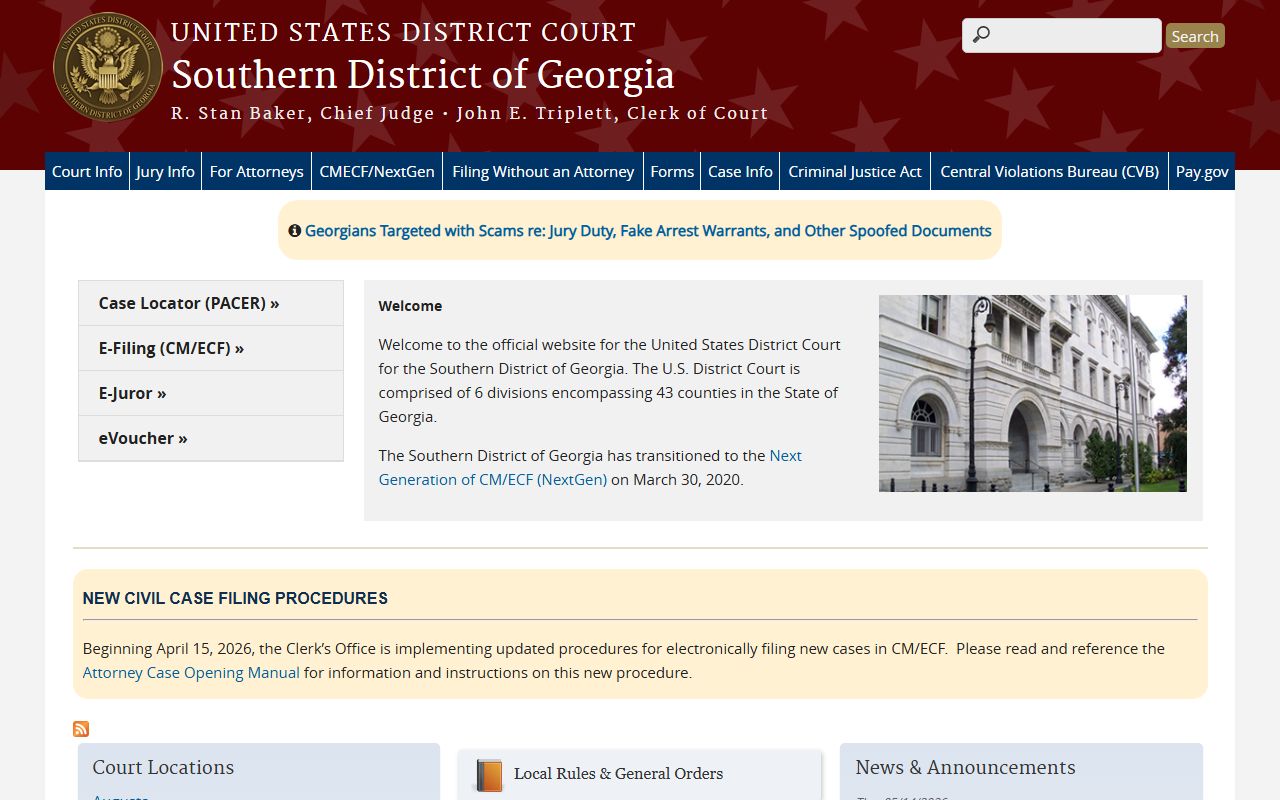
Federal records are not searched through the Montgomery County Clerk of Superior Court, Probate Court, or Magistrate Court.
The Southern District court information page lists district locations and hours for the federal system.
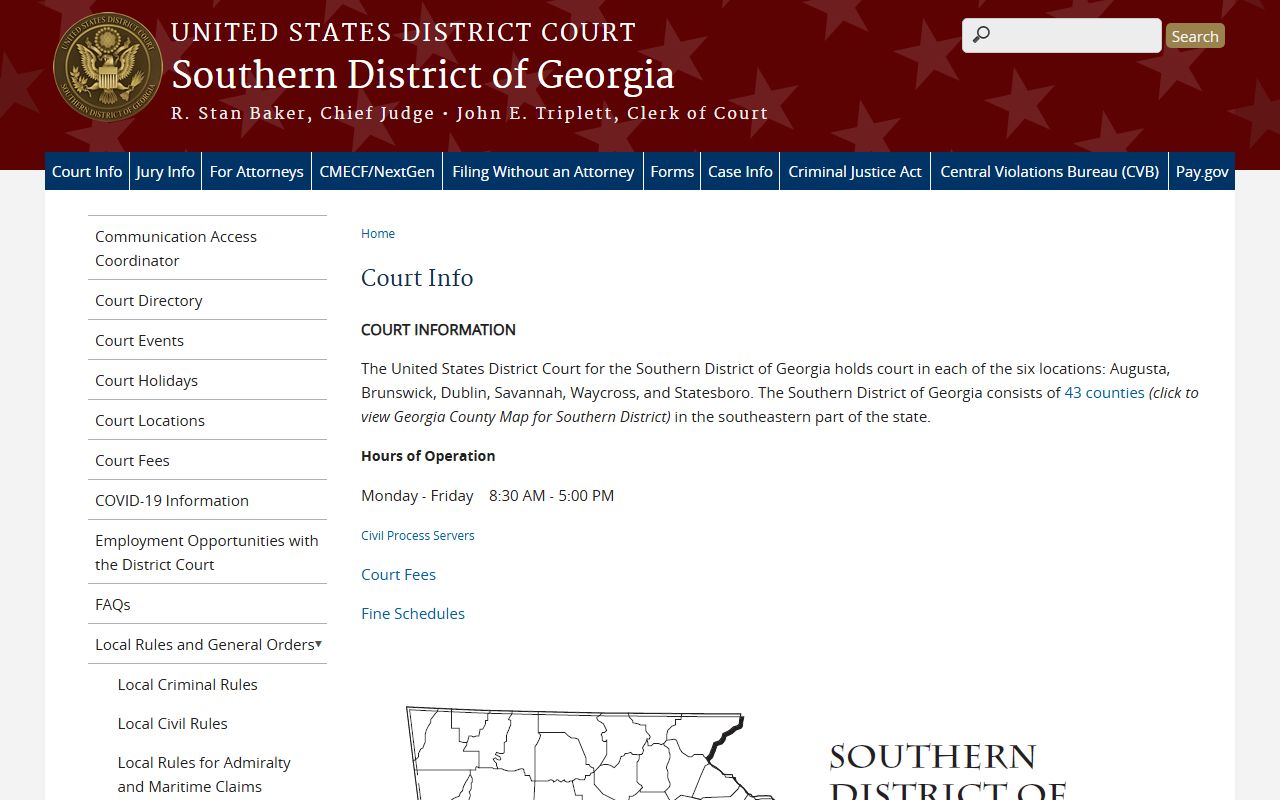
Federal courthouse locations and federal filing rules should be checked through federal court sources, not county court offices.
Montgomery Lower Courts
Magistrate Court is important because many criminal and civil issues pass through it before a Superior Court case exists or instead of Superior Court. The official county Magistrate Court page lists small civil claims under $15,000, dispossessory, garnishments, abandoned vehicles and mobile homes, personal property foreclosure, FiFa, levy, arrest and search warrants, first appearances, bond hearings, preliminary hearings, civilian warrant applications, bad checks, underage alcohol, animal control, solid waste and littering, noise, and county ordinances.
Magistrate Court has several local rules worth preserving. Filing fees are due at filing and nonrefundable. The court accepts cash, check, or money order and is not set up for credit-card payments. Judges will not discuss a matter with either party before a hearing, and staff cannot give legal advice. For warrants, the Magistrate Court page states the court is available 24 hours a day for execution of arrest and search warrants.
Probate Court is the lower or specialized venue for estates, wills, guardianships, conservatorships, marriage licenses, vital records, firearms licenses, and certain misdemeanor traffic citations and game/fish violations. Mount Vernon municipal or city matters should be checked with city offices when the citation or event is city-level rather than county-level.
The federal-state boundary is also important. The manifest includes the federal district statute at 28 U.S.C. 90, which places Georgia counties into federal districts.
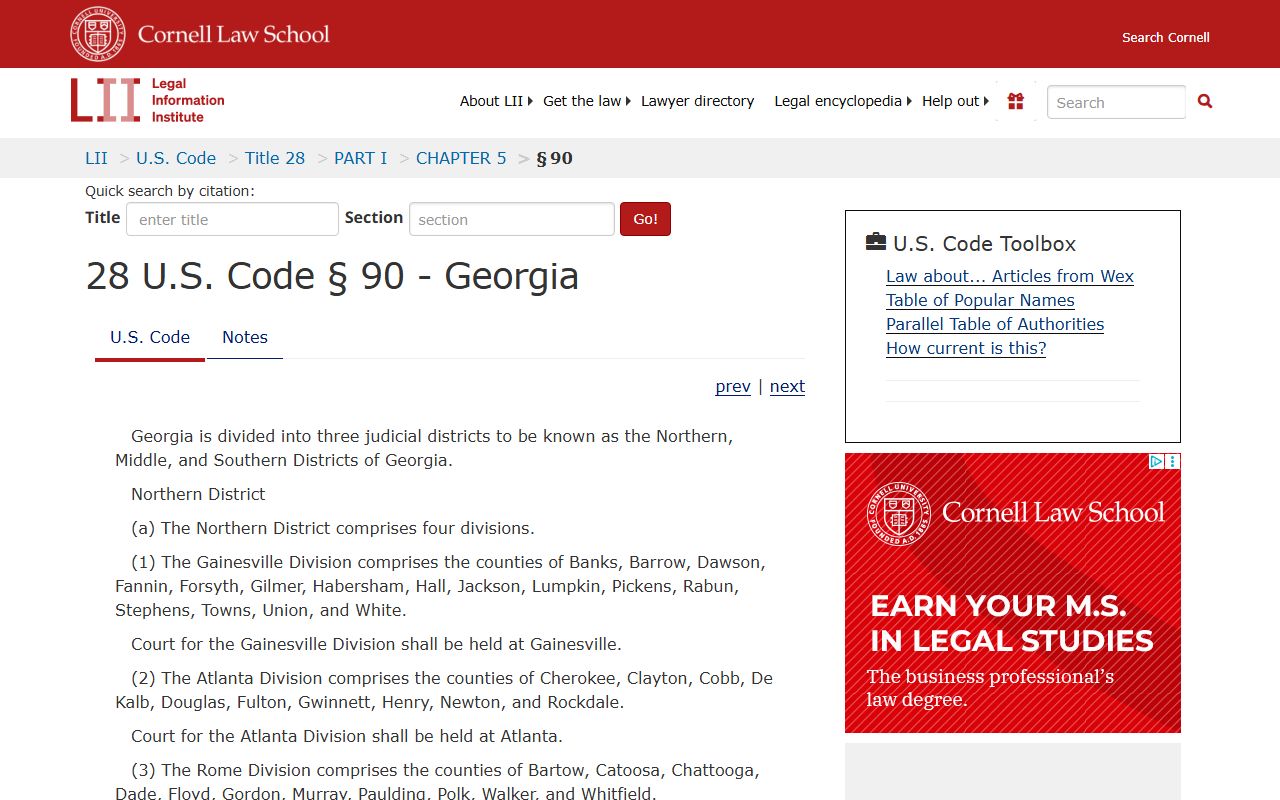
That federal statute explains federal district placement, while Georgia Superior Court jurisdiction comes from the state court structure described in the research.
Note: Use the physical courthouse address for county court visits, and call the specific court before hearings if access, security, or timing matters.