
How Montgomery County Court Records Are Searched
Montgomery County does not publish a full county-branded public case-search portal for all Superior, Magistrate, Probate, criminal, civil, divorce, and traffic court records. The official search path is divided. For Superior and Juvenile court case files, start with the Clerk of Superior Court. For estates, marriage licenses, guardianships, and probate traffic matters, use Probate Court. For small claims, dispossessory cases, garnishments, warrant applications, first appearances, and preliminary hearings, use Magistrate Court.
The search should start with the court name, party name, approximate date, and record type. A case number helps, but it is not always required for a manual clerk search. If the record is a land, lien, UCC, notary, or real-estate index item, use GSCCCA rather than a court docket search. If the record involves eFiled court documents, PeachCourt may be useful for registered users. The Georgia Courts e-access page sends users to provider websites and states that an account is required for court-record search.
- Identify the court that owns the file. Felony, divorce, land-title, equity, and broad civil matters route to Superior Court, while probate and magistrate matters use separate offices.
- Check whether the record type has an online channel. GSCCCA covers real-estate and related clerk indexes, PeachCourt handles eFiling/document access for account users, and Probate traffic payments can use EZCourtPay.
- If no portal fits, contact the clerk counter by phone, mail, or in person. Ask for a search by case number, party name, court type, and approximate filing date.
- For old or non-digitized files, ask whether the record is in paper files, minute books, microfilm, local archive storage, or a statewide clerk index.
- If the office cannot release part of the record, ask whether the limit is due to sealing, juvenile status, redaction, a confidential filing, or agency-held records under Georgia open-records rules.
Montgomery County Court Records Search Fields
Because Montgomery County court records do not sit in one public county portal, the field list depends on the system. Georgia Courts e-access is a provider list, not a local search form. PeachCourt shows registration, login, password recovery, and support options on its public landing page, but no open case-search fields were captured there. GSCCCA gives the most detailed public field set for real estate and related clerk indexes, which can matter when a court order, lien, FiFa, deed, or real-property filing is part of the record trail.
| Field Label | Type | Required | Notes / Format |
|---|---|---|---|
| Georgia Courts provider/county court link | Hyperlink list | Unspecified | Users are redirected to provider websites; Montgomery was not visibly present in the captured list. |
| Georgia Courts account | Login or registration | Yes for search | The state page states that an account is required to search court records. |
| PeachCourt register/login | Account links | Required for account use | Statewide civil and criminal eFiling/document access; support phone is 844-GA-EFILE. |
| GSCCCA party type | Radio or dropdown | Optional | All Parties, Grantor, or Grantee. |
| GSCCCA instrument type | Dropdown | Optional | Includes deed, lien, court order, security deed, power of attorney, tax sale deed, and other instruments. |
| GSCCCA county | Dropdown | Optional | All Georgia counties, including Montgomery. |
| GSCCCA search name | Text | Likely required for name search | For individuals, instructions say to enter last name, first name. |
| GSCCCA date range | Date fields | Optional | Display Results From and through fields use month/day/year format. |
Types of Montgomery County Court Records
Montgomery County court records include files from Superior Court, Probate Court, Magistrate Court, and limited city-level matters where a municipal court has a traffic or ordinance role. Superior Court is the general-jurisdiction trial court in the Oconee Judicial Circuit. It handles felony criminal cases, divorce, land-title disputes, equity matters, and broad civil actions that do not fit in a limited court. The Clerk of Superior Court also manages Juvenile court records, but juvenile access is restricted.
Probate Court records are different from Superior Court files. They include estates, wills, guardianships, conservatorships, marriage licenses, vital records handled locally, firearms licenses, probate traffic citations, game and fish violations, and probate minute books. Magistrate Court records include small civil claims under $15,000, dispossessory matters, garnishments, abandoned vehicle/mobile home matters, personal property foreclosure, FiFa and levy records, arrest/search warrants, first appearances, bond hearings, preliminary hearings, civilian warrant applications, bad checks, underage alcohol, animal control, solid waste/littering, noise, and county ordinance matters.
- Superior civil files may show complaints, answers, motions, orders, judgments, subpoenas, settlements, dismissals, and post-judgment activity.
- Superior criminal files may show warrants, accusations or indictments, bond orders, arraignment records, motions, pleas, verdicts, sentencing orders, and disposition entries.
- Family and divorce files are Superior Court records, while Georgia DPH can verify divorce information but does not issue certified divorce decrees.
- Probate files may show estate petitions, wills, guardianship orders, marriage-license records, probate traffic records, and minute-book entries.
- Magistrate files may show claim statements, dispossessory filings, garnishments, warrant applications, preliminary-hearing entries, and bond records.
What Montgomery County Court Records Show
A full court record is more than a name search result. It can include the case number, court, county, judicial circuit, judge, filing date, event date, case type, parties, attorneys, docket entries, orders, judgments, financial fields, and documents. Criminal and traffic matters can add charges, statutes, bond details, first appearance, preliminary hearing, arraignment, plea, verdict, sentence, probation, restitution, fine, and cost fields. Probate, marriage, and guardianship files have their own terms, such as decedent, ward, applicant, petitioner, administrator, executor, inventory, accounting, and discharge.
| Field | What It Shows |
|---|---|
| Case number | The court's file number or civil action file number used to locate pleadings, docket entries, and copy requests. |
| Court and county | The Montgomery County court or office that owns the file, such as Superior, Probate, or Magistrate Court. |
| Parties | Names and roles such as plaintiff, defendant, petitioner, respondent, state, decedent, ward, or applicant. |
| Docket entries | A date-by-date list of filings and events, including complaints, answers, motions, orders, judgments, continuances, warrants, pleas, sentences, and appeals. |
| Documents | Filed pleadings, motions, orders, judgments, warrants, citations, petitions, inventories, accountings, marriage records, and guardianship orders. |
| Disposition | The final outcome, such as judgment, dismissal, plea, sentence, discharge, or other court action that closes or changes the case. |
The Georgia Superior Court Clerks' Association cost schedule source is assigned to this court records page and helps explain why copy, filing, and certification costs should be checked before ordering records.
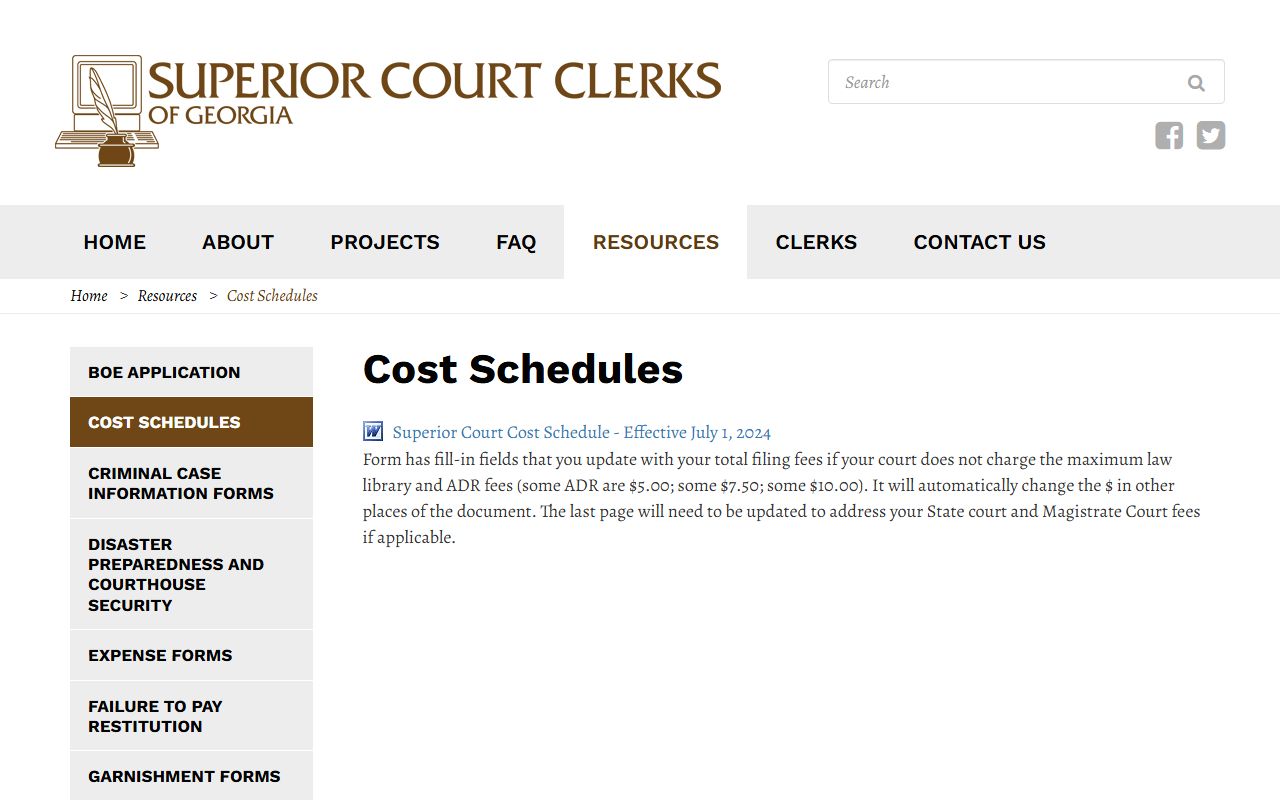
For Montgomery County court records held by the Superior Court clerk, use the local clerk first, then confirm any statewide cost schedule or copy rule that applies to the type of filing.
Public Access to Montgomery County Court Records
Georgia's public-records framework starts with O.C.G.A. 50-18-70, which defines public records broadly for agency records. The Governor's open-records summary also cites the three-business-day response rule and reasonable search, redaction, and production charges. Court files are often requested through the clerk that keeps the case, not through a general county open-records form. For Montgomery County, that means the Superior Clerk, Probate Court, or Magistrate Court will usually be the first record-access point.
Some records are agency records rather than court records. Sheriff's administrative records, incident reports, jail booking records not posted online, and non-court government records may need a Georgia Open Records Act request to the holding agency. A filed case document, court order, docket entry, certified copy, or probate minute-book entry should be requested from the court office that maintains the file. Ask whether the office can provide plain copies, certified copies, file inspection, or a search for older books.
The Georgia vital records service source is assigned to this court records page because family, marriage, divorce, and probate searches often cross the line between court records and vital records.
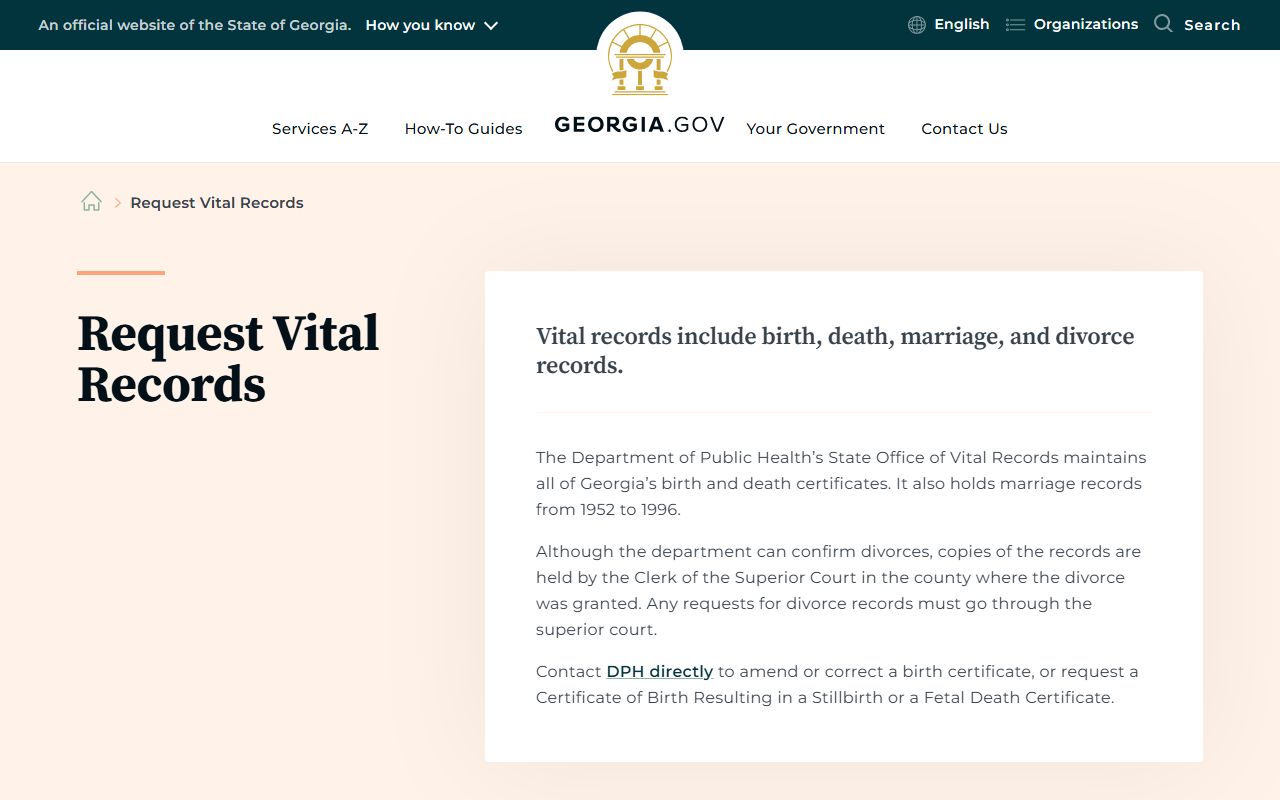
Use the state vital-record channel for the records it covers, but request Montgomery County divorce decrees from the Superior Court clerk and local marriage or probate items from Probate Court.
Note: A public docket entry does not mean every document in the file is available without redaction or clerk review.
Restricted Montgomery County Court Records
Montgomery County court records can be public in part and restricted in part. Juvenile court records and juvenile law-enforcement records are more limited than adult court records, and Georgia law separates juvenile law-enforcement records from adult arrest files. Adoption and vital-record amendment files tied to certified court orders can be sealed. Probate mental-health matters are not ordinary public lookup material. Social Security numbers, financial account numbers, full dates of birth, minor identifying data, medical information, and similar fields may be redacted from otherwise public filings.
Criminal-history restrictions use Georgia's record-restriction framework under O.C.G.A. 35-3-37. A restriction in a criminal-history system does not always remove every clerk-held court document from public view. A person may need to identify the arresting agency, prosecutor, court with original jurisdiction, and final disposition, then follow the statute and any court process for sealing clerk-held criminal-history information. Montgomery County users should confirm current forms, fees, and eligibility with the clerk, prosecutor, or counsel.
In-Person Court Record Requests
For in-person Montgomery County court records, use the specific counter that owns the file. The courthouse address for the Superior Clerk, Probate Court, and Magistrate Court is 400 South Railroad Avenue, Mount Vernon, GA 30445. Bring the case number if known, the names of the parties, the case type, approximate filing or event date, and the copy type needed. If the request is for certified copies, ask before arriving whether the office can prepare the record the same day and what payment methods are accepted.
Clerk of Superior Court
400 S. Railroad Avenue
P.O. Box 311
Mount Vernon, GA 30445
912-583-4401
Monday-Friday, 8:30 AM-5:00 PM
Probate Court can be reached at 912-583-2681, and Magistrate Court can be reached at 912-583-2170. Both list the courthouse as their physical address and use the same published weekday business hours. For probate traffic citations, the Probate Court page says payable citations may be paid through EZCourtPay or by phone if no court appearance is required.